

Updated November 2026.
Portfolio Management Services (PMS) are offered by many wealth management firms to cater to the needs of High Net Worth Individuals. A PMS is somewhat like a mutual fund in that a professional manages your money, but your investments are held directly in your own demat account rather than pooled with other investors. Under the SEBI (Portfolio Managers) Regulations, 2020, the minimum investment in a PMS is ₹50 lakh.
PMS are of two main types, discretionary and non-discretionary. In a discretionary PMS, the portfolio manager takes investment decisions on the client’s behalf. In a non-discretionary PMS, the portfolio manager provides recommendations and executes transactions only with the client’s approval. A third form, advisory PMS, only provides advice and leaves execution to the client.
Because the securities are held in the investor’s own name, every purchase and sale by the portfolio manager is a taxable event for the investor: short-term and long-term capital gains tax and securities transaction tax apply as they would on your own trades. Mutual funds have an advantage here, because buying and selling within the fund’s portfolio does not create a tax liability for the investor until you redeem your units.
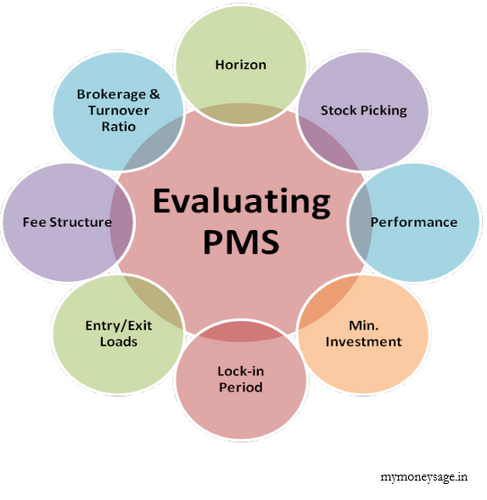
PMS providers are registered with and regulated by SEBI. The retail-protection framework is lighter than for mutual funds because PMS clients are expected to be larger, more experienced investors. Fees can include a fixed management fee, a performance fee linked to returns above a threshold, or a combination, along with other charges, so it is important to read the disclosure document and compare the total cost with that of mutual funds. SEBI requires portfolio managers to report performance in a standardised manner, which makes comparison easier.
A PMS can be useful for investors with large portfolios who want a customised, concentrated portfolio and are comfortable with higher costs and risk. For most investors, diversified mutual funds offer similar professional management at a lower cost and with better tax efficiency.
Related reading: Alternative Investment Funds explained, and understanding equity shares.

