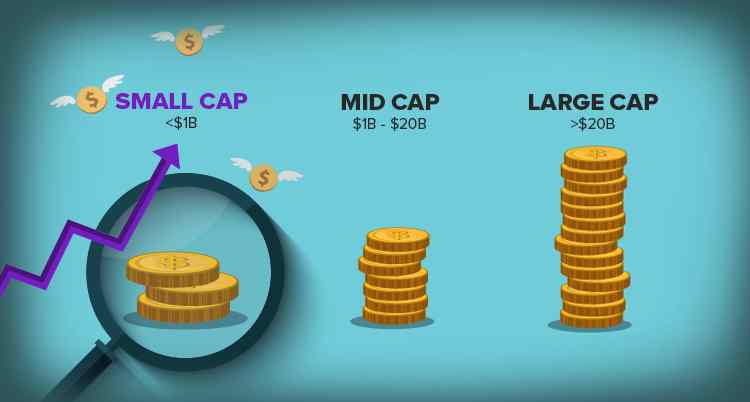
Comparison of large cap, mid cap and small cap stocks

Large Cap, Mid Cap and Small Cap

Updated guide: This topic is now covered in full, with 2026 rules and figures, in our complete guide to mutual funds for beginners, including SEBI’s current definitions of large cap, mid cap and small cap companies. Market Capitalization of a company is defined as the market price of one equity share of the company multiplied…

Updated guide: This topic is now covered in full, with 2026 rules and figures, in our complete guide to mutual funds for beginners, including SEBI’s current definitions of large cap, mid cap and small cap companies.

Market Capitalization of a company is defined as the market price of one equity share of the company multiplied by the total number of equity shares issued by the company.
Large Caps are companies with market valuation of Rs 25,000 crore or more. Mid-Caps are companies with market valuation of up to Rs 25,000 crore. Small Caps are companies with market valuation of Rs 10,000 crore or less.

There is another way of segregating Large Cap, Mid Cap and Small Cap companies. The companies which contribute to the first 70% of the total Market Capitalization are called Large Caps. The companies which contribute the next 20% of the total Market Capitalization are called Mid-Caps. The Companies which belong to the bottom 10% of Market Capitalization are called Small Caps.

Large cap companies are quiet stable and their stock price does not appreciate or depreciate drastically during bull or bear rallies or stable market conditions. Mid cap and Small cap companies are highly volatile and their stock price can appreciate or depreciate drastically. They can give extremely high returns during short durations at the same time you may end up with heavy losses in a short time. Hence they are quiet risky.

Related reading: types of mutual funds explained, and understanding equity shares.

Mutual fund investments are subject to market risks. Please read all scheme related documents carefully before investing.

Disclaimer: The content on Mungekar Wealth is for general information and educational purposes only. It is not investment, tax, legal or financial advice, and it is not a recommendation to buy, sell or hold any security, fund or other product. Investments in securities markets are subject to market risks; past performance does not guarantee future returns. Figures quoted are from published sources as of the date of writing and may have changed. Please consult a SEBI-registered investment adviser, chartered accountant or other qualified professional before making any financial decision.


Discover more from Mungekar Wealth

Subscribe to get the latest posts sent to your email.

Sameer C Mungekar avatar

About the Author

Sameer Mungekar worked in India’s investment and personal finance industry from 2015 to 2025, advising individuals and families on mutual funds and insurance. He holds a Commerce degree from the University of Mumbai and completed NISM certifications in Series 5A/5C (Mutual Fund Distributor), 10A/10B (Investment Adviser), 15 (Research Analyst) and 17 (Retirement Adviser), along with an IRDA certification for insurance advisers; these have since lapsed. He now writes Mungekar Wealth as an independent educational resource and does not offer personalised investment advice.